A definition that changes with time, geography and the law
Few foods are as universal and, at the same time, as difficult to define as chocolate. Present in practically every corner of the world, consumed by people of all ages and social classes, chocolate seems like a simple concept. But it’s not. The answer to the question “what is chocolate?” varies according to historical period, country, legislation and even consumer culture.
From sacred origins to the modern world
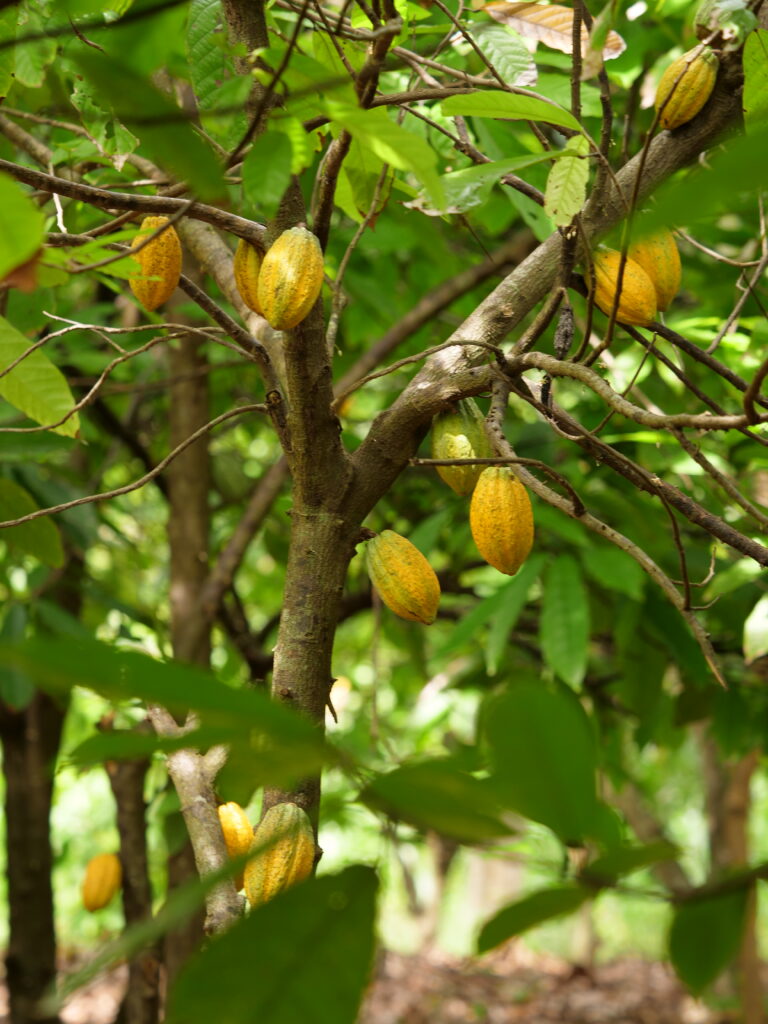
The first traces of cocoa consumption date back to around 3,300 years before Christ, in the region that today corresponds to Ecuador, more specifically in Santa Ana-La Florida, in the Mayo-Chinchipe-Marañon river basin. From then on, cocoa gained importance in other Central American civilizations.
Between 1,200 and 400 BC, the Olmecs in Mesoamerica leave clear evidence of its consumption. Later, between 250 and 950 AD, the Mayans developed and widely disseminated the drink known as xocoatl, made from cocoa, water and spices. In the Aztec period, between 1325 and 1521, cacao took on a central role in society, with detailed records of its preparation, consumption and symbolic connection to the cacao tree documented by chroniclers such as Bernardino de Sahagún.
The meaning of the word chocolate
The word “chocolate” itself has its origins in the term xocoatl, from the Nahuatl language, resulting from the combination of xococ (bitter) and atl (water). The term first appeared in a European language – Castilian – at the end of the 16th century. At the time, chocolate was a bitter drink made up of cocoa, water, chillies, vanilla and achiote, a far cry from today’s sweet versions.
The invention of solid chocolate
For centuries, chocolate remained essentially a drink. It wasn’t until 1847, in England, that Joseph Fry developed the first solid chocolate bar. A few decades later, in 1875, Daniel Peter created milk chocolate in Switzerland. In 1936, Nestlé introduced white chocolate, made from cocoa butter, without cocoa solids.
These industrial milestones have profoundly shaped the way chocolate is produced, marketed and consumed to this day.
A legal definition… imprecise
Despite its popularity, chocolate remains a legally unstable concept. Dictionaries themselves provide imprecise definitions and, from a legal point of view, there is no global standard. What is considered chocolate in the United States may not meet the legal requirements of the European Union.
This lack of legislative uniformity even distorts worldwide consumption data, since products classified as chocolate in one country may be excluded from that category in another. Basically, chocolate varies – in format, composition and definition – from country to country.
A product with no defined moment
Unlike wine, coffee, tea or beer, chocolate is not associated with a specific moment of consumption. It’s not seen as a drink, nor as a staple food. It’s everywhere, but without a clear ritual. This lack of definition is also reflected in the way it is sold.
While wine is organized by country, region, grape variety, year and producer, chocolate often appears disorganized, with little visible diversity and dominated by the “usual suspects” – big global brands that are repeated everywhere in the world.
The future of chocolate
The sector is currently facing major structural issues. Uniform legislation is one of them. Another is the consumption format itself: will chocolate continue to be mostly solid or could it return, in an innovative way, to the liquid format?
Bean-to-bar brands are emerging as agents of change, focusing on the origin of the cocoa, the taste and the aroma. However, despite their growth, they still represent around 0.2% of the overall market volume. The challenge is huge: how to grow to a significant share without losing identity and positive impact with fine & flavour cocoa producers?
The answer seems to lie in information and training – for cocoa producers, chocolate producers and, above all, consumers.
In short, chocolate is not just a food product. It is history, culture, economy and identity. And perhaps its greatest richness lies precisely in the difficulty of defining it absolutely.
Pedro Martins Araújo